linguaggio : italiano

italiano

 Automatic Battery Pack Assembly Line For ESS

What Is a Battery Insulation Paper Pasting Machine?

July 17 , 2026
What Is a Battery Insulation Paper Pasting Machine?

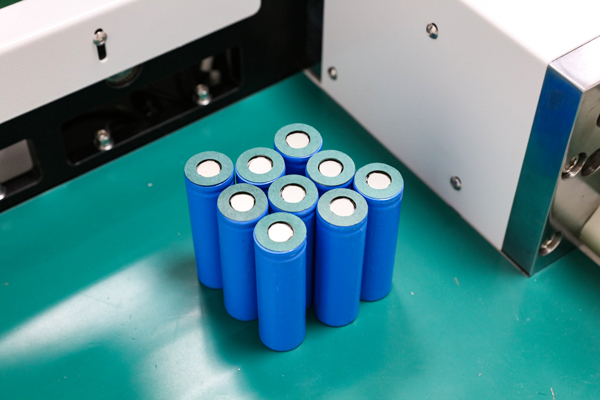
In cylindrical battery pack production, insulation paper is applied to the positive terminal of each cell before sorting, assembly, and welding. This small insulating layer helps separate the positive terminal from surrounding metal parts and reduces the risk of accidental contact during subsequent processing.

Battery barley paper sticking


For production lines handling large quantities of 18650, 21700, 26650, or 32700 cells, manual paper application can be slow and inconsistent. The insulation paper pasting machine automates the feeding, positioning, paper punching, and sticking process, helping battery pack manufacturers improve efficiency and maintain consistent application quality.


Why Is Insulation Paper Applied to Cylindrical Cells?

The positive terminal of a cylindrical cell is located close to the metal casing. During battery pack assembly, nickel strips, fixtures, tools, or other conductive parts may come into contact with the cell surface.

Insulation paper, also called barley paper or fish paper, is placed around the positive terminal to provide an additional insulating barrier. Its main purposes include:
* Reducing the risk of short circuits during battery pack assembly
* Separating the positive terminal from the metal cell casing
* Protecting the cell surface during handling and welding
* Improving the consistency and appearance of the finished battery pack
* Supporting safer subsequent processes such as sorting, spot welding, and pack assembly

Although insulation paper is a small component, its position, adhesion, and consistency directly affect the reliability of the following production steps.

How Does an Automatic Battery Sticking Machine Work?

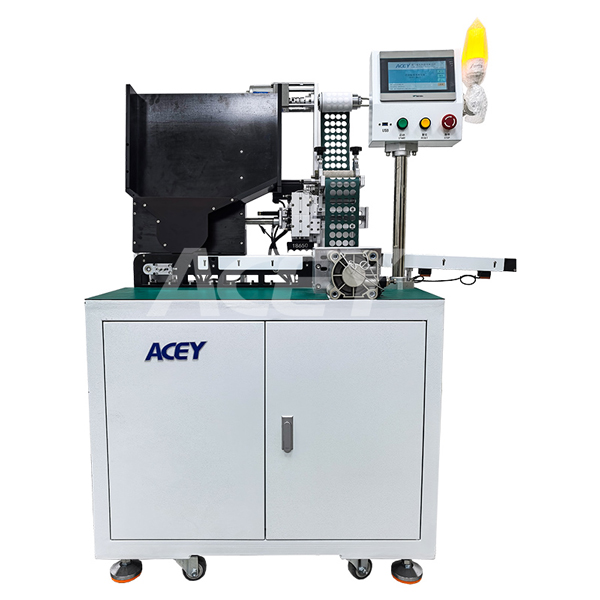
ACEY-BS01 automatic insulation paper sticking machine uses a hopper to load cylindrical cells. The cells are then transferred one by one to the working position.

The control system coordinates the feeding mechanism, stepping motor, cylinders, sensors, and paper application unit. After the cell is positioned, the machine automatically applies the pre-cut insulation paper to the designated terminal area and then discharges the finished cell.

Compared with manual operation, automated equipment provides more stable positioning and reduces variation caused by operator fatigue or differences in working methods.

The main working process includes:
1. Cylindrical cell loading
2. Automatic cell feeding
3. Cell positioning and detection
4. Insulation paper feeding or punching
5. Automatic paper application
6. Finished cell discharge
7. Production quantity recording

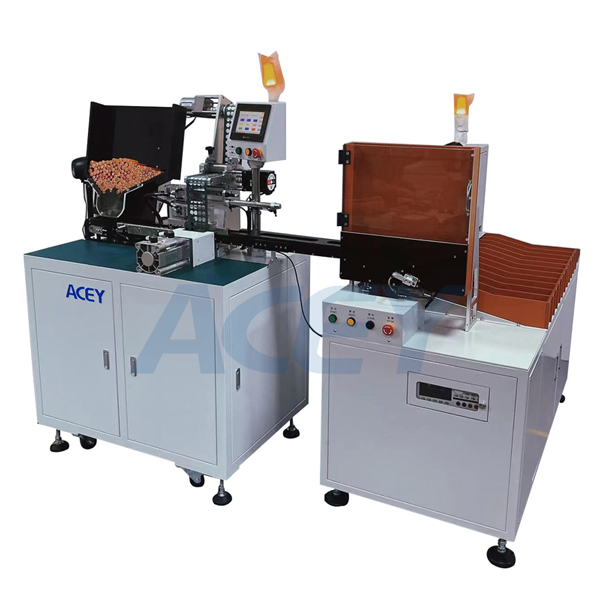
ACEY-BS01 barley paper pasting machine can also connect with other battery production equipment, such as ACEY-AS11S 11-channel battery sorting machine, making them suitable for semi-automatic and automatic battery pack assembly lines.

ACEY-SS11 barley paper pasting and sorting machine 2 in 1


Key Factors When Selecting a Battery Insulation Paper Sticking Machine

  • Compatible Cell Models
The first consideration is the cylindrical cell size. Common cell formats include 18650, 21700, 26650, 32650, and 32700. A machine that supports several cell models provides greater production flexibility.

  • Production Capacity
Production capacity should match the output of the upstream and downstream processes. If the sticking machine is significantly slower than the sorting or welding equipment, it may become a production bottleneck. For medium- and high-volume battery pack production, a capacity of approximately 3,500 to 4,000 cells per hour can meet the requirements of many cylindrical battery assembly lines.

  • Application Accuracy
The insulation paper should be placed evenly around the positive terminal without excessive offset, folding, or poor adhesion. Stable positioning depends on the accuracy of the feeding structure, sensors, motion controller, motor, pneumatic components, and tooling. Reliable paper placement also helps reduce interruptions during automatic spot welding.

  • Changeover Time
Battery pack manufacturers often process different cell sizes. The barley paper pasting machine with a simple tooling structure can reduce the time required to change models. In actual production, changeover time should be evaluated together with daily order quantities. If the product model changes frequently, quick adjustment and parameter storage can significantly improve production efficiency.

  • Equipment Footprint
A compact insulation paper sticking machine is easier to integrate into an existing production line. Mobile casters are also useful when the production layout needs to be adjusted or when the equipment is used as a standalone workstation.

  • Data and Line Integration
Modern battery pack assembly equipment increasingly requires production data recording and communication with other machines. A suitable control system can support parameter adjustment, production quantity statistics, model switching, alarm information
Lasciate un messaggio
Se sei interessato ai nostri prodotti e vuoi conoscere maggiori dettagli, lascia un messaggio qui, ti risponderemo al più presto

Casa

Prodotti

contatto

whatsApp